When the weight of the world feels heavy, gratitude unexpectedly lifts your spirit. It’s not about denying your struggles; it’s about choosing to see the light amid the darkness. This week, let’s dive into a moment of praise and reflection that can reshape your heart.
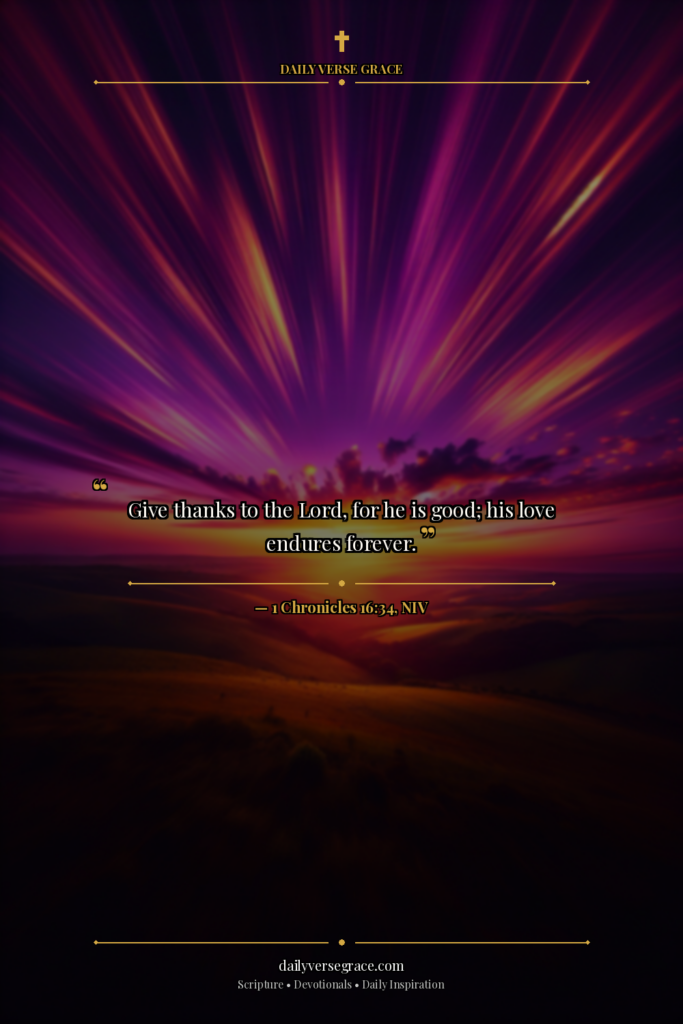
“Give thanks to the Lord, for he is good; his love endures forever.” — 1 Chronicles 16:34, NIV
The Historical Context
When King David penned these words, he was establishing the Ark of the Covenant in Jerusalem. This was no small feat; it was a powerful symbol of God’s presence among His people. David gathered a multitude to celebrate and worship, highlighting the importance of gratitude and acknowledgment of God in their lives. This moment was a collective recognition of His goodness and steadfast love. The people were facing various challenges, and here was David, leading them in a heart-felt declaration of thanks, calling them to remember not just what God had done, but who He is.
Breaking Down the Original Language
The Hebrew phrase used for “give thanks” is *yadah*. It means to extend the hands, to show one’s heart, and to acknowledge God. When you think of gratitude, do you picture open hands? In a world that often feels tight-fisted with worry and stress, that imagery can be gut-punching. This isn’t just casual thankfulness; it’s a heartfelt expression of dependence and love. Embracing *yadah* means acknowledging God’s enduring presence in every part of your life, even when things feel chaotic.
What This Meant Then vs. Now
Back then, giving thanks was a communal act, an essential part of worship. Today, gratitude can feel like an afterthought, especially when life throws you curveballs like job stress or family challenges. But the call to be thankful remains. Imagine standing in your living room, surrounded by chaos, and choosing to thank God for the little moments—laughter shared, a warm cup of coffee, or even just a quiet moment of peace. That practice isn’t just ancient; it’s incredibly relevant for you today.
Living It Out
1. **Morning Reflections**: Start each day by jotting down three things you’re grateful for. It could be your kids’ laughter or the sunshine coming through your window. This simple act can shift your perspective as you head into a day that might feel stressful.
2. **Thankful Conversations**: When talking with friends or family, challenge yourself to share something good that happened recently, no matter how small. This can cultivate an atmosphere of gratitude that may deepen your relationships and encourage others to do the same.
3. **Gratitude Journal**: End your day with a gratitude journal. Write down moments that made you smile or people who blessed you. You may find that reflecting on these moments brings a profound sense of peace and helps combat loneliness at those 2 a.m. wake-ups.
Reflection & Prayer
Reflect on this: What are the things you often take for granted? Take a moment to thank God specifically for these blessings. Your prayer could be as simple as, “Lord, I give you thanks for your endless love and the small joys of my day. Help me remember your goodness in challenging times.”
Further Study
Consider diving deeper into these verses this week:
1. Psalm 107:1
2. Colossians 3:15
3. Ephesians 5:20
4. 1 Thessalonians 5:18
Try journaling these verses. Write down what gratitude for the week looks like in each situation presented. You’ll discover that shifting your focus to thankfulness can transform your entire perspective.
As you move through this week, let *gratitude for the week* become more than just a thought; may it be a practice rooted deeply in your every moment, shaping how you view your circumstances and your life.
Never Miss a Verse
Get daily Bible verses delivered to your inbox.